The Role of Automation in AR Workflow
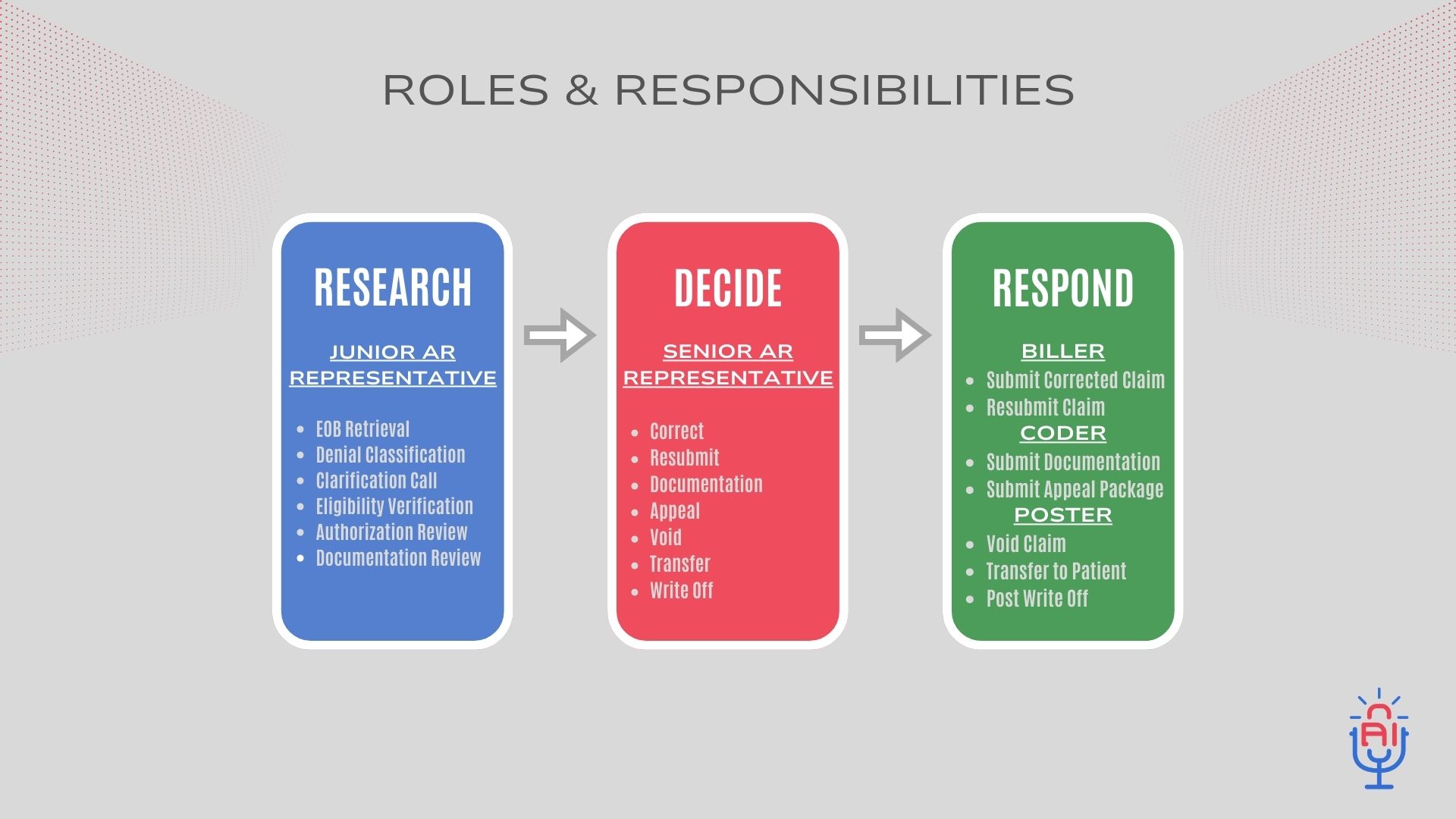
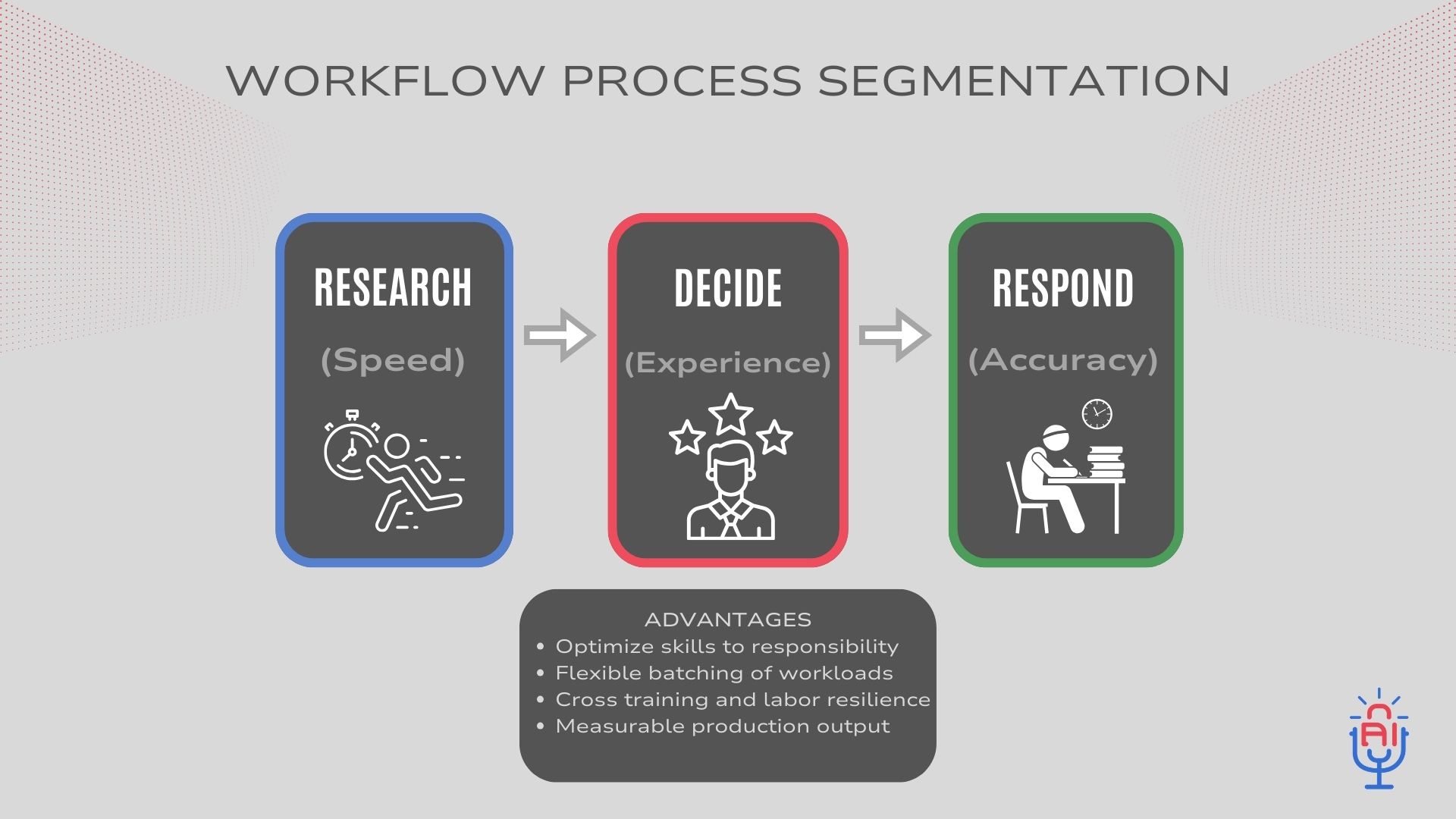
As we continue to explore the assembly-line approach to AR workflow, it’s crucial to understand the significant role that automation can play in maximizing efficiency and effectiveness – without replacing the essential human element.
Automation Opportunities
- Information Gathering: Automated systems can pull data from multiple sources, including EHRs, clearinghouses, and payer portals, providing a comprehensive view of each claim.
- Decision Support: AI-powered tools can analyze claim data and suggest next best actions, helping decision-makers of varying knowledge level to work more quickly and accurately.
- Response Execution: Many routine responses, such as claim resubmissions or simple appeals, can be automated, freeing up staff for more complex tasks.
- Performance Tracking: Automated reporting can provide real-time insights into workflow efficiency, helping managers identify bottlenecks and areas for improvement.
Real-World Example
One RCM professional shared their current world, every day experience:
“We do a lot of the prep work before taking any real action – gathering data from various systems outside of our EHR. They might be Availity, the clearinghouse, the Medicare Advantage or other payer portals, or the DDE system. This is the most time-consuming part. Should one of those information-gathering steps involve calling an insurance representative or the patient, we all know how much time that takes up. Only after I have all the information in front of me can I make sense of what has already happened (or should have happened) and begin the real work of deciding what needs to happen next to an account.”
This painstaking process isn’t unique to this hospital; it’s a familiar story echoed in billing departments across the country.
Implementation Challenges and Solutions
While the potential benefits of the assembly-line approach and automation are significant, implementation can present challenges:
- Data Integrity Issues
-
- Challenge: Inaccurate or inconsistent data in EHR systems can complicate payment accuracy validation and reporting.
- Solution: Invest in data “cleansing” initiatives and implement ongoing data quality checks.
- Staff Retention and Training
-
- Challenge: The complexity of the industry and competitive wages in other sectors can make staff retention difficult.
- Solution: Develop comprehensive training programs and create clear personal career advancement paths within the revenue cycle department.
- Technology Investment
-
- Challenge: Implementing new workflows and automation may require significant technology investments.
- Solution: Develop a phased implementation plan, starting with areas that promise the quickest return on investment.
- Resistance to Change
-
- Challenge: Staff may be resistant to new workflows and technologies.
- Solution: Communicate the benefits clearly, involve staff in the implementation process, and provide ample training and support.
 Adapting the Approach to Your Organization
While the assembly-line approach offers significant benefits, it’s important to adapt it to your organization’s specific needs and challenges. Consider these questions:
- Where are your current bottlenecks in AR management?
- Which tasks are most time-consuming for your experienced staff?
- What areas of your workflow could benefit most from automation?
- How can you leverage your existing technology infrastructure in implementing this new approach?
Embracing the Future of AR Management
Imagine the impact on your bottom line when your billing team can handle 4-5 times the claims they used to. That’s the kind of transformation early adopters of this approach can expect to experience.
The future of AR management lies in embracing innovative strategies that leverage both human expertise and technological advancements. By implementing the assembly-line approach and strategically incorporating automation, your team can be freed up to focus on tasks that require nuanced judgment and be more productive where their skills are most valuable.
The journey to optimized AR workflow may present challenges, but the potential rewards – increased efficiency, improved cash flow, and a more engaged, skilled workforce – make it a worthwhile endeavor for any healthcare leader.